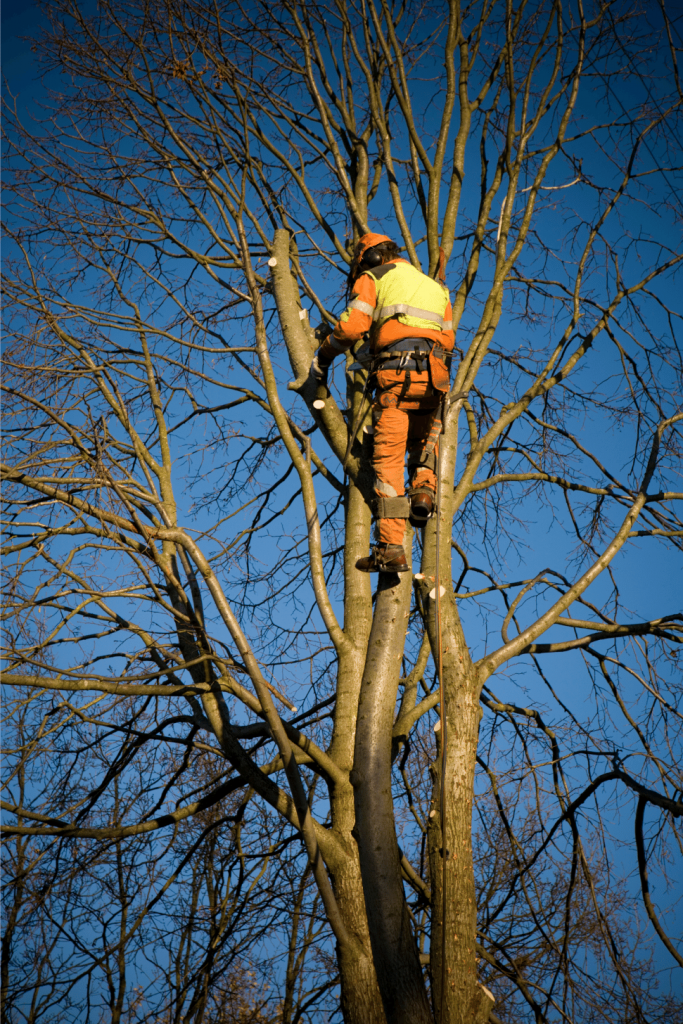
Managing Overhanging Branches Before They Affect Your Property
Tree branches growing above a roof are not always an immediate problem. A healthy, well-positioned canopy can remain compatible with nearby buildings for many years. However, branches that are too close, structurally weak or continuing to extend across the roof may eventually affect tiles, gutters and other roofline components.
For property owners in Ashford, Kent, timely tree pruning can create appropriate clearance while protecting the tree’s health and natural shape. The aim should not be to remove more growth than necessary, but to manage the relevant branches before they become difficult or hazardous.
When Branches Are Touching the Roof
Branches that make direct contact with tiles, slates or flat roof coverings should be assessed. Movement caused by wind can make them rub against the surface repeatedly, potentially dislodging materials or damaging protective coverings.
Even lighter growth can cause problems if it rests on gutters or catches beneath roof edges. Professional pruning can establish suitable separation without leaving poorly positioned cuts or unnecessarily removing large sections of the canopy.
When Clearance Is Becoming Too Limited
A branch does not need to touch the roof to require attention. Trees continue to grow, and the available clearance may narrow considerably between pruning cycles.
An assessment may be sensible when:
- Branch tips are approaching tiles or roof coverings
- Limbs extend over chimneys, roof windows or vents
- New shoots are growing towards the gutter line
- The canopy limits access for roof maintenance
- Branches move close to the building during windy weather
- Growth is beginning to surround aerials or other roof-mounted features
Pruning while branches remain manageable can allow for smaller, more selective cuts.
After Strong Winds or Storm Damage
Wind can crack branches, weaken unions or leave limbs suspended within the canopy. Damage is not always obvious from ground level, particularly when the affected branch remains caught in neighbouring growth.
Warning signs include:
- Freshly broken or hanging branches
- Split unions where major limbs meet
- Branches resting on the roof
- A sudden change in the canopy’s shape
- Exposed wood or torn bark
- Unusual movement during windy conditions
Where a damaged branch is positioned above a building, avoid standing or working beneath it. A professional tree surgeon can assess its stability and determine how it should be removed safely.
When Deadwood Is Developing Above the Building
Dead branches become increasingly brittle as they dry and decay. They may remain in the canopy temporarily, but their future behaviour can be difficult to predict.
Deadwood above a roof should be inspected because it can fall during wind or under its own weight. Smaller pieces may block gutters, while larger branches can damage the roof covering or surrounding roofline.
Selective deadwood removal can address the affected branches while retaining healthy growth elsewhere in the tree.
When Gutters Frequently Fill With Tree Debris
Leaves, twigs, seeds and small branches are a normal consequence of having trees near a property. However, unusually heavy or persistent debris may suggest that the canopy is too close to the roof or contains dead and congested growth.
Blocked gutters can prevent rainwater from draining correctly. Water may then overflow around fascias, soffits and external walls. Pruning will not eliminate seasonal debris completely, but appropriate canopy management can reduce direct overhang and remove weak material likely to fall.
When Branches Obstruct Essential Roof Features
Overhanging growth can limit access to chimneys, vents, roof windows and drainage points. Dense branches may also make routine inspections more difficult by concealing sections of the roof.
Pruning may be appropriate when growth prevents these features from remaining accessible and unobstructed. The work should be carefully planned so that suitable clearance is created without producing an unbalanced canopy.
Which Type of Pruning May Be Suitable?
The correct approach depends on the tree species, branch structure, condition and position relative to the building. Possible methods include:
- Selective branch removal to create localised clearance
- Crown lifting to remove appropriate lower branches
- Crown reduction to decrease the canopy’s overall height or spread
- Crown thinning to remove selected secondary growth
- Deadwood removal to address dead or weakened branches
- Remedial pruning following branch failure
Removing an entire limb is not always necessary. In some cases, reducing selected growth back to suitable branch unions can provide clearance while retaining the main structure.
Why DIY Pruning Can Be Risky Near a Roof
Cutting branches above a building requires control over how each section is removed and lowered. A falling limb can damage the roof, gutters, windows or nearby garden features. Ladder use, overhead cutting and unsuitable tools introduce further risks.
Incorrect pruning can also harm the tree. Flush cuts, excessive removal and poorly positioned reductions may encourage weak regrowth or expose large areas of wood. Professional tree surgeons can choose suitable cutting points and use controlled techniques around the property.
The Importance of Pruning at the Right Time
The most suitable pruning period depends on the tree species, its condition and the purpose of the work. Some trees respond better during particular seasons, while damaged or hazardous branches may require prompt attention regardless of the usual pruning schedule.
A professional assessment will consider:
- The species and growth pattern
- The branch’s size and position
- The tree’s health and structure
- The clearance required above the roof
- The likely response to pruning
- Whether staged work would be preferable
This helps ensure that the work benefits both the tree and the property.
Conclusion
Tree pruning should be considered when branches touch a roof, restrict access, contain deadwood or show signs of storm damage. Acting before large limbs become unstable or heavily established over the building can make the required work more controlled and selective.
If branches are growing over your roof in Ashford, Kent, Ashford Tree Care can assess the tree and recommend an appropriate pruning approach. Professional attention can create practical clearance while preserving the tree’s health, balance and appearance.
Call us on: 01233 542 901
Click here to find out more about Ashford Tree Care
Click here to complete our contact form and see how we can help with your trees needs.