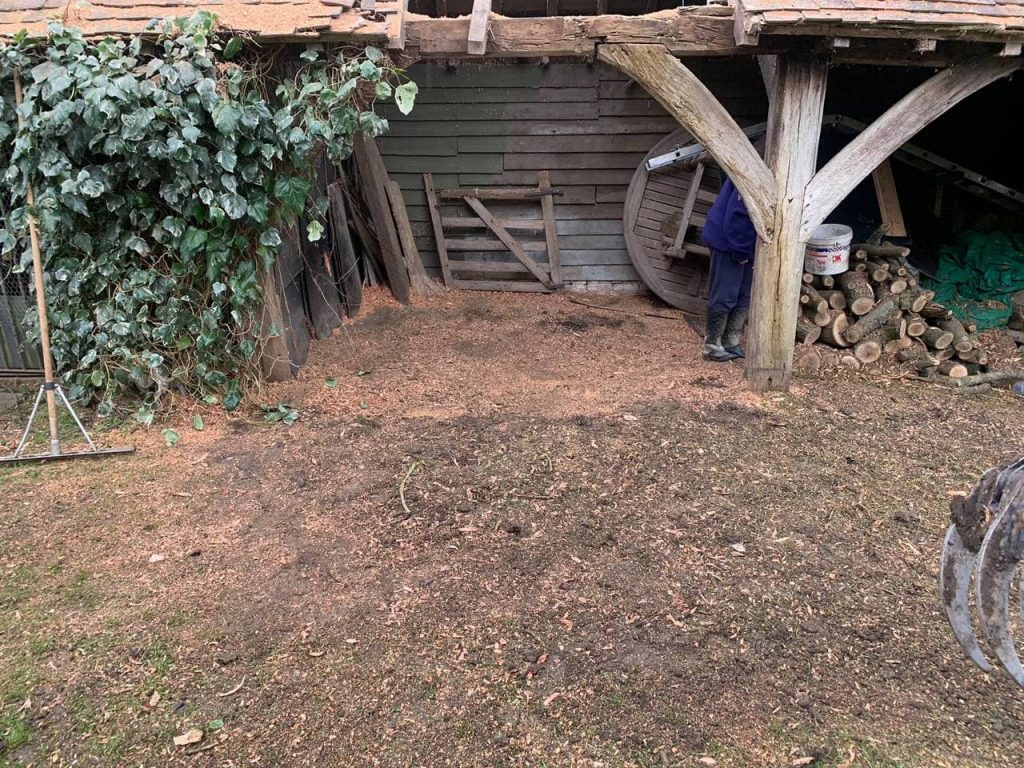
After a tree has been felled, the remaining stump can easily become a forgotten part of the garden. Over time, grass, weeds and surrounding plants may partially conceal it, making the stump difficult to see and increasing the likelihood of someone tripping over it.
An old stump can also restrict how the garden is used, interfere with maintenance and leave the area looking unfinished. For homeowners in Ashford, Kent, professional stump grinding provides an effective way to remove this obstruction and restore a safer, more practical outdoor space.
Why an Old Tree Stump Should Not Be Ignored
A low stump may appear harmless, particularly when it sits away from a path or seating area. However, gardens change with use. Children may play nearby, visitors may walk across the lawn, or the area may eventually be needed for planting, landscaping or outdoor furniture.
As vegetation grows around the stump, its position can become less obvious. This is especially problematic when the stump is close to a frequently used route, lawn edge, gateway or washing line.
Signs That a Stump Has Become a Trip Hazard
Not every stump presents the same level of obstruction. It may require attention if:
- It is hidden by grass, weeds or low-growing plants
- Exposed roots cross a lawn, path or access point
- The stump sits near a patio, shed or seating area
- Children or pets regularly use the surrounding space
- Its surface has become uneven as the wood decays
- People must alter their route to avoid it
- It interferes with mowing or other garden maintenance
Even a stump that was once clearly visible can become harder to notice as its colour fades and surrounding vegetation becomes established.
Why Natural Decay Is Not Always the Best Solution
Leaving a stump to decay naturally can be a lengthy and unpredictable process. The outer wood may soften while denser sections remain firmly rooted in the ground. This can create an irregular surface rather than removing the obstruction.
A decaying stump can also develop cavities, loosen at the edges or leave exposed roots around the surrounding soil. Until the wood has broken down completely, the area may remain difficult to use and maintain.
Waiting for natural decomposition does not provide a clear timescale for reclaiming the space. Professional stump grinding offers a controlled way to reduce the stump below ground level.
How Stumps Interfere With Garden Maintenance
Tree stumps frequently make mowing and edging more difficult. Cutting equipment must be manoeuvred around the obstruction, which can leave tufts of uncut grass and untidy edges. Contact with hidden wood or exposed roots can also damage garden machinery.
Weeds and unwanted growth often establish themselves around a stump where normal maintenance is restricted. Some tree species may also produce new shoots from the remaining stump or root system, creating repeated growth that needs managing.
Removing the central obstruction makes routine garden care more straightforward and allows the area to be maintained consistently.
What Is Professional Stump Grinding?
Stump grinding uses specialist machinery to reduce the remaining trunk into small wood fragments. The stump is usually ground below the surrounding soil level, removing the prominent obstruction without excavating the entire root system.
The process generally includes:
- Assessing the stump and its surroundings
- Clearing vegetation and loose debris from the working area
- Identifying nearby structures and accessible surface obstructions
- Grinding the stump and major surface roots to an appropriate depth
- Removing or redistributing the resulting wood chippings
- Leaving the area ready for suitable reinstatement
The precise approach depends on the stump’s size, tree species, location and accessibility.
Why Grinding Is Often Preferable to Digging Out a Stump
Fully excavating a mature stump can require substantial ground disturbance because large roots may extend well beyond the original trunk. Grinding focuses on the main stump and troublesome surface roots, reducing the visible obstruction while limiting unnecessary disruption to the surrounding garden.
This makes stump grinding particularly useful where the stump is close to an established lawn, planting area, fence or other garden feature. A professional assessment helps determine the practical grinding depth and whether any prominent roots also need attention.
Can the Area Be Used Again Afterwards?
Once the stump has been ground down, the resulting hollow can be prepared for its intended use. Loose grinding material may need to be removed or allowed to settle before the area is filled with suitable soil.
The ground can often be returned to lawn or incorporated into a planting area, depending on the condition of the site. Where paving, a structure or another permanent feature is planned, the ground may require further preparation because the remaining roots will gradually decompose.
Planning the future use of the space before grinding begins helps ensure that the stump is reduced to a suitable depth.
Why Professional Stump Removal Matters
Stump grinders are powerful machines, and successful removal requires more than simply passing the cutting wheel over the visible wood. The operator must consider access, the spread of the stump, nearby features and the required finish.
Professional stump grinding provides a controlled and thorough result. It can remove the trip hazard, minimise disruption and prepare the area for its next practical use.
Conclusion
An old tree stump can become a genuine trip hazard when it is hidden by vegetation, positioned near a regularly used area or surrounded by exposed roots. It may also complicate garden maintenance, encourage unwanted regrowth and prevent the space from being used effectively.
Ashford Tree Care provides professional stump grinding for gardens in Ashford, Kent. If an unwanted stump is making your outdoor space less safe or practical, contact our team to arrange an assessment and discuss the most suitable way to remove it.
Call us on: 01233 542 901
Click here to find out more about Ashford Tree Care
Click here to complete our contact form and see how we can help with your trees needs.